Boots On, Car Keys Down: A Rail-First Weekend at a Farmhouse
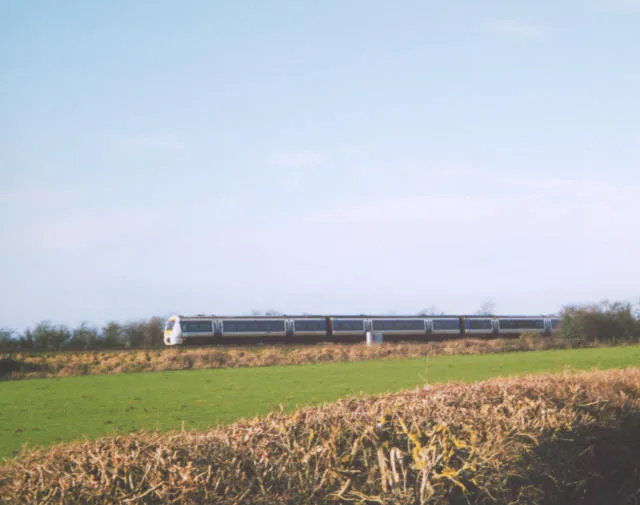
Photo: Stephen Craven, CC BY-SA 2.0, via Wikimedia Commons
There is a moment on every car-free weekend when you realise the train has already made a decision for you. You cannot nip to a garden centre. You cannot take a wrong turn down a lane and end up somewhere else. You have a station, a path and a farmhouse door. For a rural break, that is not a limitation. It is the whole appeal.
This is not an argument against cars. It is an argument for trying one trip without one. In 2026, with fuel, parking and the general faff of rural lanes, the train can be the simpler option. It also sets a pace that suits a farmhouse stay: slower, lighter, more attentive to the weather.
Start with the station, not the door
The mistake people make is to book the farmhouse first and worry about the journey later. Do it the other way round. Find the nearest station with a sensible service, then look at the last mile. At Drem Farmhouse, the station at Drem is part of the appeal: a short walk, a village edge, and a route that feels like a proper arrival rather than a drop-off.
Use the operator's app and National Rail for the timetable, but do not stop there. Open an OS map or a local core paths map and trace the footpath from platform to door. Check the surface. A dotted line on a map can be a ploughed field in November. Look at daylight, too. In early winter 2026, sunset in East Lothian is before five o'clock, so a three-mile walk after a delayed train is not the romantic plan you imagined.
Have a backup. Save a local taxi number. Ask the farmhouse what they recommend. If the last mile is along a busy lane with no verge, do not pretend it is a footpath. A short taxi is better than a miserable arrival. The point is to reduce the car, not to turn the weekend into an endurance test.
Pack like you mean to carry it
A wheelie suitcase is a wonderful thing on a station concourse and a curse on a muddy path. For a farmhouse weekend, take a rucksack. Something around 35 to 40 litres is enough for two or three nights if you are honest with yourself. Wear your boots on the train. Pack waterproofs at the top. Put a headtorch in the lid.
The rule is simple: if you cannot carry it for thirty minutes on a wet path, it is too much. That means one change of clothes, not three. Decanted toiletries. A book instead of a stack. Ask the farmhouse about a hairdryer before you pack one. Leave the fancy shoes at home. You are not going to a wedding.
Food is the other trap. Do not arrive with a week's groceries in a heavy bag. Buy the basics at home if you must, then shop the village. A farm shop, an honesty box or a small Co-op will fill the gaps, and it makes the weekend feel more local. Bring a strong tote or a small dry bag for the walk back.
The last mile is the first proper walk
The last mile is not an obstacle between the train and the kettle. It is the transition. You come out of the station, adjust your rucksack, and suddenly you are in the weather. The lane smells of wet leaves and diesel. A dog barks. Someone nods. By the time you reach the farmhouse gate, you have already arrived in the place.
Download the map before you leave, because signal is not a guarantee. Carry a paper printout if you are prone to phone batteries dying in the cold. In November, a headtorch is not optional if there is any chance of arriving after four. And if the path is genuinely muddy, embrace it. Boots are meant to get dirty. That is why you wore them on the train.
Let the train set the pace
A car-free weekend has a different rhythm. You walk from the door because you have to, and then you keep walking because it is lovely. You notice the pub is twenty minutes away, not a drive. You take the train to the next village for lunch and walk back along the coast. You stop trying to fit everything in, because the timetable will not let you.
That is the particular pleasure of letting the train set the pace. It makes the weekend smaller and better. You do less, see more, and return with legs that feel used. The car can stay at home. The boots can do the work.
A few hard-won details
- Check for engineering works before you book. A rail replacement bus is not the end of the world, but it changes the last mile.
- Screenshot your tickets and the walking route. Cold batteries and rural signal are a bad combination.
- Carry a few pound coins for honesty boxes and a folded tenner for emergencies.
- Wear your boots, not your best trainers. If the train is warm, loosen the laces rather than carrying the weight.
- Tell the farmhouse when you expect to arrive, and tell them if you are delayed. A warm welcome is easier to arrange than a surprise.
- Ask about drying space. Wet waterproofs need somewhere to drip that is not the bedroom floor.