A Fire Worth Tending: The Guest’s Part in a Farmhouse Hearth
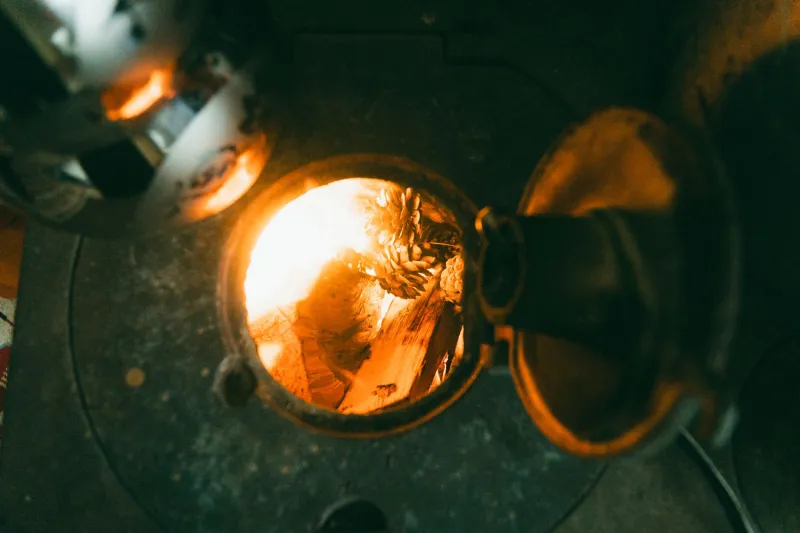
Arriving at a farmhouse in the dark half of the year, there are few better greetings than a wood burner already ticking over in the sitting room. It is not just warmth. It is the smell of dry ash, the soft collapse of a log, the sense that someone has thought about your evening before you have taken your coat off. But a fire is not a switch. It is a small, living system, and the guest has a part to play in keeping it pleasant, safe and worth coming back to.
Before the Match Comes Out
A well-run farmhouse hearth should feel obvious without being mysterious. Look for the host’s instructions before you start. Where are the air controls? Is there a damper? Has the chimney been swept recently? Is there a carbon monoxide alarm in the room? These are not fussy questions. They are the difference between a cosy night and a headache, and any good host will be glad you asked rather than guess.
If the fire is already laid, resist the urge to rearrange it. A pyramid of kindling and a couple of small logs is usually deliberate. If the stove is cold, check that the air vents are open before you strike a match. A cold flue needs a little encouragement. Forcing a fire with too much paper or a pile of logs is how you fill a room with smoke and lose the goodwill of everyone in it.
The Log Basket Is Not a Lucky Dip
The best farmhouse log baskets are generous but not infinite. Use what has been left for you, and leave the private stack alone unless your host has said otherwise. Seasoned hardwood is the default in most UK farmhouse stays: ash, oak, birch, maybe some beech. Kiln-dried logs are easy to spot and easy to trust. Dry wood sounds hollow when you knock two pieces together, feels light for its size and has no green tinge or damp patches.
Avoid the temptation to burn anything that happens to be nearby. Painted wood, treated timber, cardboard, magazines and old furniture are not firewood. They can spit, smoke and send unpleasant things up the chimney. Softwood is not the villain it is sometimes made out to be, provided it is properly dry, but it burns quickly and is better for getting things going than for a long evening. If the basket contains a mix, start small and work up.
Air, Patience and the Art of Not Poking
A wood burner is controlled by air, not by brute force. Open the air controls before lighting, let the kindling catch, then add a couple of small logs once the flames are established. Only then should you think about closing things down. A damper, where fitted, needs a light touch; too much closure too soon and the fire sulks, the glass blacks over and the room fills with the kind of haze that makes everyone suddenly interested in bed.
Once the fire is going, feed it little and often rather than cramming it full. A bright, clean burn is usually a sign that air and fuel are in balance. A sluggish, smoky burn is a sign to open a vent, not to throw on another log. Keep the door closed when the fire is running, and use the gloves if they are provided. Fire tools are not decorative, but they are also not toys. A quick poke can be useful; a prolonged campaign against the embers usually ends with sparks on the hearth.
When the Evening Winds Down
Letting a fire die down is part of using it well. At the end of the night, stop adding logs and let the embers settle. Do not douse a hot stove with water. Do not leave the door open to cool the room faster. If your host has asked you to leave the fire to burn out overnight, do that. If they have asked you to shut it down, follow their instructions. Ash should go into a metal container, never a plastic bin, and never straight into a bag that will sit indoors.
On departure, leave the hearth as you found it: tools together, guard back in place, ash where it belongs. It is a small courtesy, but it is the sort of thing that makes a farmhouse stay feel like a shared house rather than a hotel room with a fire in it.
Children, Dogs and the Hearth
A fire is a wonderful thing to gather round and a poor thing to test. Children should be supervised near the stove at all times, even when the glass is closed. A fire guard is not a sign that the house is unwelcoming; it is a sign that the host has thought about real life. Keep toys, blankets and drying clothes well clear. Dogs are often drawn to the warmth, which is charming until a tail meets a hot door. Give them a bed at a sensible distance and a clear route away from the hearth.
If anyone in the party has breathing difficulties, ask before lighting up. Smoke is not a personality trait. A well-managed fire should burn cleanly, and if it does not, the answer is more air or drier wood, not more fuel.
What Good Hosts Leave Out
The best farmhouse hosts make the fire easy without making it fussy. Matches, firelighters, kindling, dry logs, gloves, an ash bucket and clear instructions are the basics. A carbon monoxide alarm and a recent chimney sweep are the quiet essentials. A note about smoke control areas, if relevant, is helpful rather than officious. So is a simple line about how much wood is reasonable to use. Good hospitality is not a bottomless log pile; it is a clear invitation to enjoy the fire responsibly.
The Warmth Is Shared
A wood burner is one of the small rituals that makes a rural break feel different from a city weekend. It asks for attention, but not much. Read the instructions, use dry wood, give the fire air, let it settle and leave it safe. Do that, and the hearth becomes more than a cosy extra. It becomes part of the welcome: a fire worth tending, and a farmhouse that trusts its guests to know how.