The Calm Kitchen: Stocking a Farmhouse for a Weekend Without Overpacking
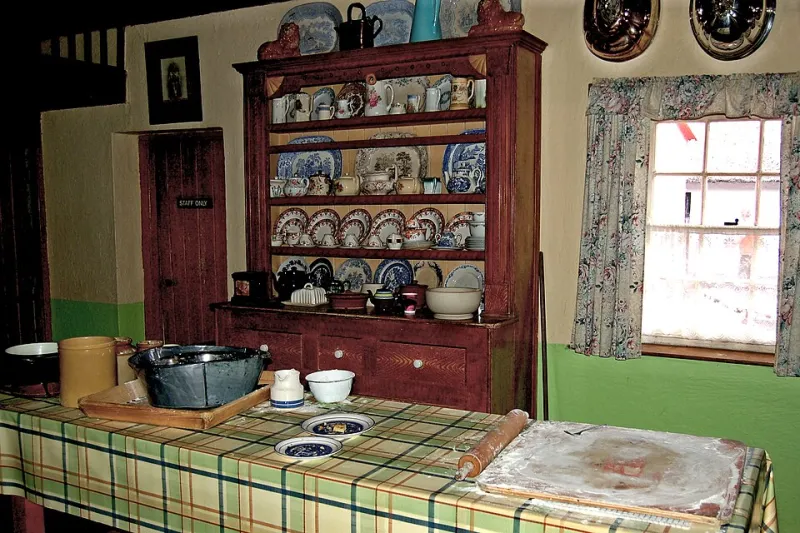
Photo: Joseph Mischyshyn , CC BY-SA 2.0, via Wikimedia Commons
There is a particular look on a guest's face when they arrive at a self-catering farmhouse and the back of the car is a wall of cool bags. It is the look of someone who has packed for a siege, not a weekend. We understand the impulse. Rural breaks can make people anxious about the nearest shop, the size of the oven, whether anyone will be able to buy milk on a Sunday. But a farmhouse kitchen works best when it is stocked with a bit of calm rather than a fortnight's worth of panic buying.
This is the practical version: what to bring, what to buy when you get there, and what is honestly better left to the village shop.
The Arrival-Night Rule
Plan the first meal before you leave home. Not a three-course dinner — just something that can be put on the hob or in the oven while you are still finding the corkscrew. A pot of stew, a tray of roasted vegetables and sausages, a curry, a soup with good bread. Bring it in a lidded container if you are coming straight from work. It removes the whole 'we must find a supermarket immediately' scramble.
Add a small arrival kit: milk, tea, coffee, butter, a loaf of bread, a few eggs. That is enough to stop the first hour feeling like a minor emergency.
Breakfast: Keep It Boring in the Best Way
Breakfast is where people overpack most. You do not need four types of cereal and a waffle iron. Choose one warm thing and one cold thing. Porridge oats, bread for toast, eggs, yogurt, fruit that travels well. If you are somewhere with a proper farm shop nearby, buy the bacon and the mushrooms there rather than bringing them from home in a cool bag that takes up half the boot.
A note on coffee: bring what you actually drink. A farmhouse cafetière is not the moment to experiment with a new blend you saw on offer.
One Proper Supper, Not Three
For a two-night stay, you need two evening meals — not a week's worth of recipes. Make one of them the arrival-night one-pot. Make the other something simple and local: fish from the coast, a pie from the butcher, a big bowl of pasta with whatever vegetables looked good. Lunch can be soup, sandwiches, or a pub if you are out walking.
Buying for every meal in advance is how cars get overloaded and fridges get stuffed with food that goes home again. Leave room for a whim. Leave room for the farm shop.
Let the Season Do the Shopping
In late autumn and winter, that means roots, greens, leeks, cabbage, squash, apples, and the good earthy things that sit happily in a cool box. In summer it is different — soft fruit, tomatoes, salad, whatever the nearest stall is selling. The rule is the same: buy what is in season near where you are standing, not what you panic-bought in a city supermarket on Thursday night.
In East Lothian we are spoiled: potatoes, vegetables, cheese, seafood, bakery bread, and farm shops that are worth a detour in their own right. Pick one local thing and build a meal around it. That is more memorable than a trolley full of beige favourites.
Dietary Needs: Ask Early, Pack Specifically
If someone in your party is vegetarian, vegan, gluten-free, or has a serious allergy, do not leave it to the village shop to solve at 6pm. Check the kitchen before you arrive — does it have a decent pan, a colander, a baking tray? Bring the specific items you rely on: a particular brand of stock, gluten-free pasta, non-dairy milk, your own utensils if cross-contamination is a real risk.
Then ring or email the accommodation in advance. A good farmhouse will tell you what is already there and what is not. It is a far calmer conversation to have a week before than in a car park with a rumbling stomach.
What to Leave to the Village Shop
The village shop is not a failure of planning. It is part of the weekend. Use it for milk, bread, newspapers, a forgotten onion, a bar of chocolate, a local chutney, and the kind of small conversation you do not get in a supermarket self-checkout.
Do not expect it to be a full weekly shop. Do not expect it to be open at all hours. But do use it. A rural weekend where you never set foot in the nearest village is a weekend spent in a very nice bubble.
Drinks: Enough, Not a Cellar
Bring what you like to drink, plus a little more than you think for the first night. A bottle of something cold, a decent red, a few beers, whatever your version of a good evening is. But you do not need to transport an entire wine rack. Many farmhouse stays are within reach of a good independent shop, and a local bottle is a nicer souvenir than a car full of familiar labels.
The Freezer Is Your Friend
If the farmhouse has a freezer compartment — even a small one — use it. Ice, a loaf of bread, a tub of soup, a bag of peas. It gives you slack. It means you are not forced to cook everything on day one. It also means you can buy a little more local produce than you strictly need and not watch it wilt.
A Short Checklist
- Arrival meal, made ahead if possible
- Breakfast basics: milk, tea, coffee, bread, butter, eggs
- One simple second supper, plus room for a local buy
- Specific dietary items you cannot assume will be there
- A torch, a cool bag, and a sense of proportion
The honest farmhouse larder is not about being under-prepared. It is about being prepared for the right things. Bring the meal you will actually be glad to see on Friday night. Bring the dietary bits that matter. Then let the village shop, the farm stall and the local butcher do the rest. The car will be lighter, the fridge will be calmer, and the weekend will feel less like a logistics exercise and more like a break.