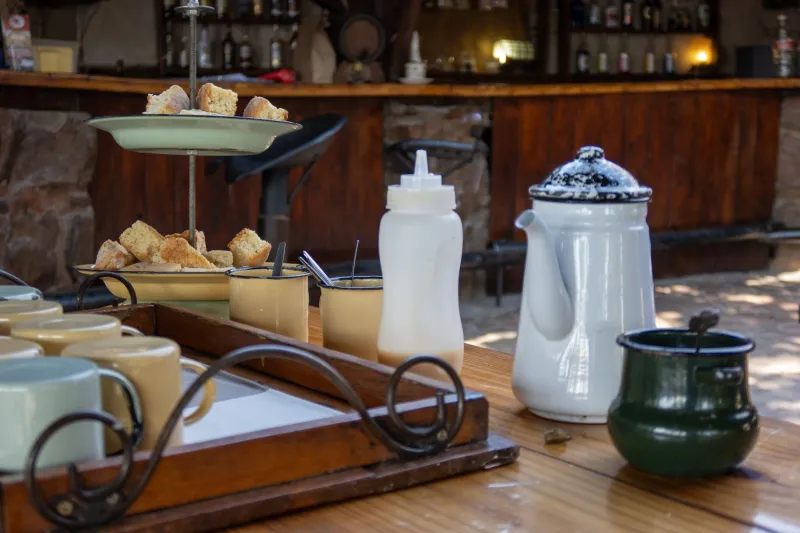
The First Night's Pot: Cooking Quietly in a Borrowed Farmhouse Kitchen
Photo: Missvain, CC BY 4.0, via Wikimedia Commons
There's a particular moment, about twenty minutes after the key turns, when the bags are down but nobody has quite claimed a room yet. The kettle goes on. Someone opens a cupboard looking for mugs and finds instead a shelf of mismatched china, a tin of birthday candles, and a note in biro reading please don't put the blue jug in the dishwasher. That's the moment you realise you're cooking in somebody else's kitchen this weekend, and it's going to be rather lovely.
Self-catering in a farmhouse isn't the same as cooking at home, and it isn't meant to be. The pans are heavier or lighter than yours. The oven has opinions. The salt is in a jar with no label. Adjusting to all of that is half the pleasure, if you let it be.
Start With a Slow Lap of the Room
Before you unpack the cool bag, walk the kitchen. Not a nosy snoop, just a quiet reconnaissance. Find the hob, the grill, the kettle, the bin, the light switches that are in unexpected places. Open two or three drawers. Somewhere in there is a tin opener, and you'll want to know where it lives before the wine is open and the hunger has turned.
Look for the house notes. Good farmhouse stays tend to leave a folder or a laminated card with the wi-fi password, the recycling rules, and, crucially, a line or two about the oven. If it says the second dial runs hot, believe it. These notes are written by people who have burnt the same tray of sausages you're about to burn.
The Pan Question, Answered
Every borrowed kitchen has one good pan and several decoys. The good one is usually heavy, dark and slightly worn at the handle. The decoys are thin, pale and stick to everything. Give yourself permission to use only the good one all weekend. Nobody is marking you on range.
Knives are the other small negotiation. A borrowed farmhouse knife is rarely razor-sharp and is often someone's favourite old thing. Don't hunt for a steel and don't try to improve it. Cut softly, use a board, and if you really can't manage, a pair of kitchen scissors will get you through most of a weekend's cooking without complaint.
Work Out the Oven Before You Commit
Farmhouse ovens come in three flavours: ancient and faithful,现代农业-modern but baffling, and Aga-shaped. Each needs a different approach.
- The old faithful will run a little cool. Give it ten extra minutes and don't trust the dial's numbers so much as the feel of the heat when you open the door.
- The baffling modern one hides its settings behind symbols. Look for a manual in a drawer before you guess. Guessing leads to the grill.
- The range cooker is a houseguest all of its own. If it's on, it's on, and the plates on top may be hotter than the ones on the side. Ask which is which.
A cheap oven thermometer in your bag is not a ridiculous thing to pack. It's the least romantic item you'll bring and possibly the most useful.
A First-Night Supper That Doesn't Overrun the Welcome
The first evening is not the time for a three-pan production. You've driven, you've unpacked, you've had a look at the garden. What you want is one pot, one tray, or one pan, and something that will sit happily while the conversation drifts.
Our usual answer is a slow sausage and bean stew: good sausages from a farm shop on the way, a couple of tins, an onion, a spoon of something mustardy, and a long, low simmer while the kettle goes round again. Bread on the side, cheese if you remembered it, and that's the welcome taken care of.
If you're arriving late and the light has gone, something even simpler works: a tray of roasted vegetables and a bake-at-home loaf, or pasta with a sauce you brought from home in a jar. The point isn't to impress anyone. The point is to be sitting down, warm and fed, before you've properly finished unpacking.
Shop on the way if you can. A farm shop or a village deli twenty minutes from the door will tell you more about the county you've just arrived in than any guidebook, and the person behind the counter will happily tell you which of their cheeses survives a car journey.
Small Kindnesses That Go a Long Way
Borrowed kitchens reward a light touch. Wipe the surfaces before you leave, not because anyone is checking, but because it's the same courtesy you'd want if it were your own home being handed on. Wash or stack the dishes as the owners have asked. Take the bin out if the notes mention where it goes. Return the chairs to the table, put the salt back in the cupboard, and leave the tea towel folded rather than draped over the tap.
One thing worth resisting: don't rearrange. It can be tempting to reorganise a cluttered shelf, but a kitchen is a small map of someone's habits, and moving the flour to a more sensible spot is a change they'll notice for weeks.
If something breaks, say so. Every farmhouse owner we've ever spoken to would far rather hear about a chipped mug on the day than find it in the sink after you've gone. Honesty is the easiest thing to pack and the hardest to leave behind.
The Kitchen You'll Remember
By Sunday morning, the borrowed kitchen stops being borrowed. You know which cupboard hides the mugs, which ring of the hob is fastest, and where the good pan lives. You'll have a small ritual of tea and toast, and someone will have claimed the wonky chair by the window.
That's the quiet pleasure of cooking in someone else's space. For a couple of days you get to try on a different way of doing things, and then you hand the keys back with the kitchen much as you found it, a little warmer for having been used.