Tail-Wag Test: Finding a Farmhouse Where Dogs Are Proper Guests
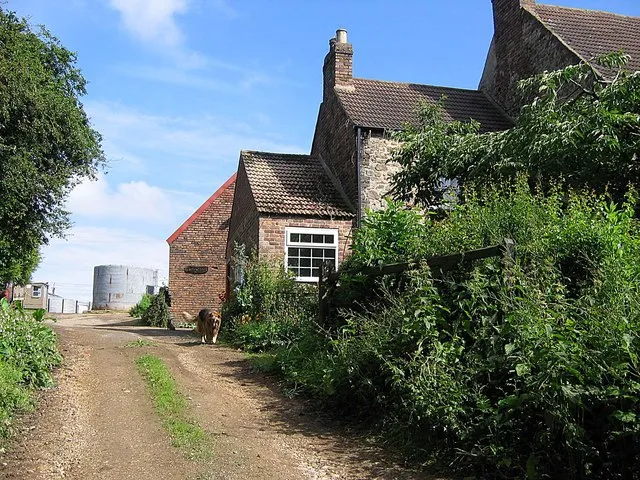
Photo: Roger Smith, CC BY-SA 2.0, via Wikimedia Commons
Ask most people what makes a farmhouse dog-friendly and you will hear the same answer: a bowl by the door and a blanket by the fire. Useful, yes. Enough? Not even close. A dog does not care about the welcome basket. It cares about where it can run, where it can sniff, whether the garden gate shuts, and whether the first walk starts at the front door or after a twenty-minute drive.
That is why the best rural breaks are chosen with the dog's vote in mind. At Drem Farmhouse, we think a dog-friendly stay should be judged from the tail end of the lead, not the human end of the booking form.
Start with the field, not the welcome basket
A secure exercise field is the single most useful thing a farmhouse can offer a dog-owning guest. It is also the thing most often described in vague terms. Enclosed is a lovely word. It can mean six-foot stock fencing with double gates, or it can mean a low garden wall and a hopeful expression.
Before you book, ask what encloses the field. Is it stock-proof? Are there gaps under hedges or gates? Is it shared with other dogs, and if so, are there time slots? A field that is safe for a steady older Labrador may not suit a young spaniel with a personal mission to investigate every rabbit hole in East Lothian.
At Drem Farmhouse, the dog vote matters because the countryside is not a blank canvas. It is a working landscape, with sheep, cattle, crops and fences that all have a say. A good farmhouse should help you enjoy that landscape without turning every walk into a negotiation.
Mud is part of the deal
A muddy-paw station sounds like a luxury. In practice, it is basic infrastructure. Look for an outside tap, a hose, a boot tray, a stack of old towels and a floor that can take a wet dog without drama. A utility room or boot room is worth more than a fancy welcome hamper when you come back from a walk in November.
Ask where dogs are allowed to sleep. Can they go upstairs? Are they allowed on the sofa? Is there a stair gate? Are dogs ever left alone in the house, and if so, where? These questions are not fussy. They are the difference between a relaxed stay and a week of hovering nervously beside a cream carpet.
A blanket and a water bowl are the baseline. The best places go further: somewhere to hang a wet lead, a bin for muddy waste, a torch by the door for the last walk of the night, and a clear set of house rules that treats dogs as guests rather than a problem to be managed.
Walks from the door, with livestock in mind
A farmhouse stay works best when you can step out and walk before the car engine has warmed up. That means footpaths from the door, not just a leaflet for a country park ten miles away. Ask for an Ordnance Survey map, a printed route or a local walk book. Ask whether the paths are stile-heavy, whether they are pushchair-friendly, and what the ground is like after rain.
The livestock question is the one dog owners should never skip. Are there sheep or cattle in neighbouring fields? Are dogs expected to stay on lead through the farmyard? Which seasons are most sensitive? A local host will know where the ewes are lambing, which fields are cut for silage, and which route avoids the bull.
A good walk from a farmhouse should feel like a proper outing without requiring a military operation. A loop to a village pub, a woodland track, a beach at low tide, a quiet lane with a view: these are the walks dogs remember, because they are full of smells and small decisions. The humans remember the pub at the end.
The questions worth asking before you book
A short email to the host will tell you more than any gallery of photos. Ask:
- Is the exercise field fully enclosed, and with what kind of fencing?
- Are dogs allowed off lead anywhere on the property?
- How many dogs do you accept, and is there a fee per dog?
- Are dogs allowed upstairs, on furniture, or left alone in the house?
- Is there an outside tap, hose and towels for muddy paws?
- What are the nearest walks from the door, and are there livestock nearby?
- Is there a dog-friendly pub within walking distance?
- Where is the nearest vet, and is there an out-of-hours service?
None of these questions are unreasonable. A host who welcomes dogs properly will have clear answers, not a sigh.
Let the dog cast the deciding vote
You will know within an hour whether the choice was right. A good dog-friendly farmhouse gives your dog somewhere to settle, somewhere to sniff and a routine that does not feel like an obstacle course. If your dog can flop by the fire after a muddy walk, sleep without barking at every creak, and head out again the next morning with tail up, you chose well.
The bowl by the door is a nice touch. The field, the hose, the gate that latches and the walk that starts at the gate are the real welcome.