Twenty Minutes of Dark: A Lantern Walk from the Farmhouse Gate
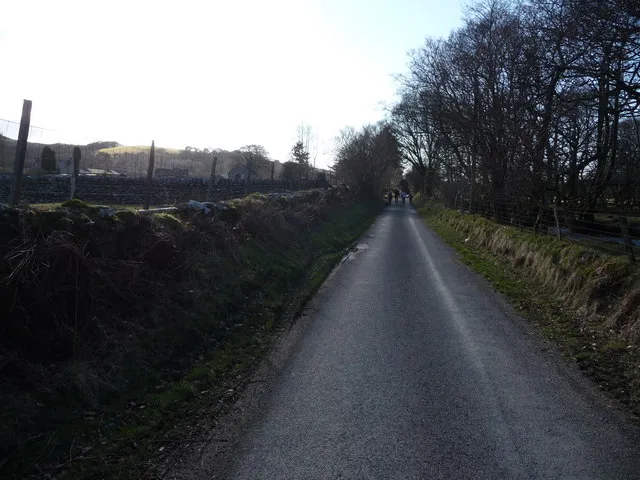
Photo: Jeremy Bolwell , CC BY-SA 2.0, via Wikimedia Commons
There's a particular quiet that settles over a farmhouse at about half three on a December afternoon. The light thins to a weak gold, the yard lamps come on early, and somebody says what somebody always says: "Shall we get out before it's properly dark?"
This is an argument for saying yes — and for doing it more than once. Not as a route to conquer, not as a test of waterproofs, but as a small, repeatable habit that gives a winter stay a shape. Out of the gate, twenty minutes of lane and field edge, back to a lit kitchen and a kettle that's already thinking about it.
Why the shortest version works best
December in Britain simply doesn't do long evenings outdoors. In East Lothian, sunset lands somewhere near a quarter to four in midwinter, and the useful light drains away soon after. Fighting that is a fool's errand; working with it is the whole trick.
A fifteen- to twenty-five minute loop, walked at talking pace, gets you out into the last of the dusk and back before anyone's fingers stage a protest. That's the brief. It isn't a hike and shouldn't be sold as one. The pleasure is in the smallness of it: boots on wet gravel, a gate latch clicking, woodsmoke drifting over a hedge from a cottage you'll never identify, the first star turning up above the treeline while you're still pretending to look for it.
If you want a date to hang it on, the winter solstice — around 21 December — is the obvious one. But the walk doesn't need an occasion. Any of the dark weeks will do.
Three questions to ask before you set off
Every farmhouse host has been asked this a hundred times and will answer gladly, so ask. It takes two minutes and it's the difference between a wander and a proper walk.
Which way do you go? Hosts know the local lanes and footpaths the way you know your own kitchen. They'll tell you which loop is safe after dark, which verge is walkable when it's wet, and which gate is stiff in the cold.
Is there anywhere to avoid? A lane with no verge, a blind bend, a stretch that floods — these are the details no map gives you. Nor does a map tell you where the farm dog at number four likes to announce himself.
How long does it take at a stroll? Not at a march. At a stroll. Then add five minutes for the standing-still bit, because there will be a standing-still bit.
While you're at it, mention roughly when you're going and roughly when you're back. Not because anything will happen, but because it's the sort of small courtesy that makes a farmhouse feel like a place where people look out for each other.
Kit that earns its place
You need less than you think.
- A torch each. One between four people means three people walking blind. Small and handheld beats a phone, which will be flat by the time you want it for anything useful.
- Something reflective. A hi-vis tab or a cheap slap band on a coat sleeve costs almost nothing and does a great deal on an unlit lane.
- Boots, not trainers. December verges are either wet, muddy or both. There is no third option.
- A flask, if you're keen. Optional, but a shared flask at the halfway point has converted many a sceptic.
- A lantern, if you're feeling ceremonial. Battery tea lights in a jam jar or a proper hurricane lamp are lovely — and much safer than anything with a real flame on a windy lane.
Manners for a dark lane
Being out after dark on a country lane comes with a small code, and most of it is about not being the person everyone else has to work around.
Walk single file on a lane with no pavement, and put the person with the brightest torch on the outside of the bend. Dip your beam when a car approaches — full beam in a driver's eyes on a narrow lane is genuinely dangerous. Don't strobe, don't wave a torch at a horse, and don't shine anything into a farmyard or a lit window; people live here.
Lanterns are for atmosphere, not navigation. Carry one for the joy of it and a torch for the seeing. And if a dog comes along, keep it on a lead on the lane and clip a light to its collar, because a black spaniel at dusk is invisible until it isn't.
On a footpath, keep to the line, close gates behind you, and don't cut across a field because the corner looks closer. The path is the path.
The turn for home
There's a moment on this walk, and you'll know it when it arrives. You've gone as far as you meant to go, the sky has gone from grey to ink, and someone says, "Right then." You turn round.
And there, ahead, is the farmhouse — one or two windows lit, a lamp over the back door, maybe a shape moving past the kitchen glass. It looks, from a cold lane in the middle of nowhere, like the best place on earth. That's the entire point of the exercise. You cannot get that feeling by staying in.
Back to the kettle
The last bit of the ritual matters as much as the walk. Boots off at the door. Wet coats on the pegs, not over the back of a chair. Someone fills the kettle, someone else finds the biscuits, and everyone stands about the kitchen for ten minutes saying how dark it got, how quiet it was, how they didn't realise how many stars there were.
Do it twice on the same stay and it becomes a tradition. Do it in the same week, on the same loop, in the same year-after-year way, and it becomes something better — a thing your family does in December, in the countryside, together, for no reason other than that it's nice.
Here at Drem Farmhouse, we're firmly of the view that the best holidays aren't built from big days out. They're built from small things repeated. A walk before breakfast. A fire that stays in all evening. Twenty minutes of dark, and a lit window to come back to.
That's the whole lantern walk. No kit list worth bragging about, no summit, no Strava entry. Just a gate, a torch, a bit of company and a kettle at the end.
Go on. It's nearly dark already.